Toxic Silence at Work: What It Is and What It Says

Hasmik Hovhannisyan
Head of the HR Department, Penotex LLC
3 min read
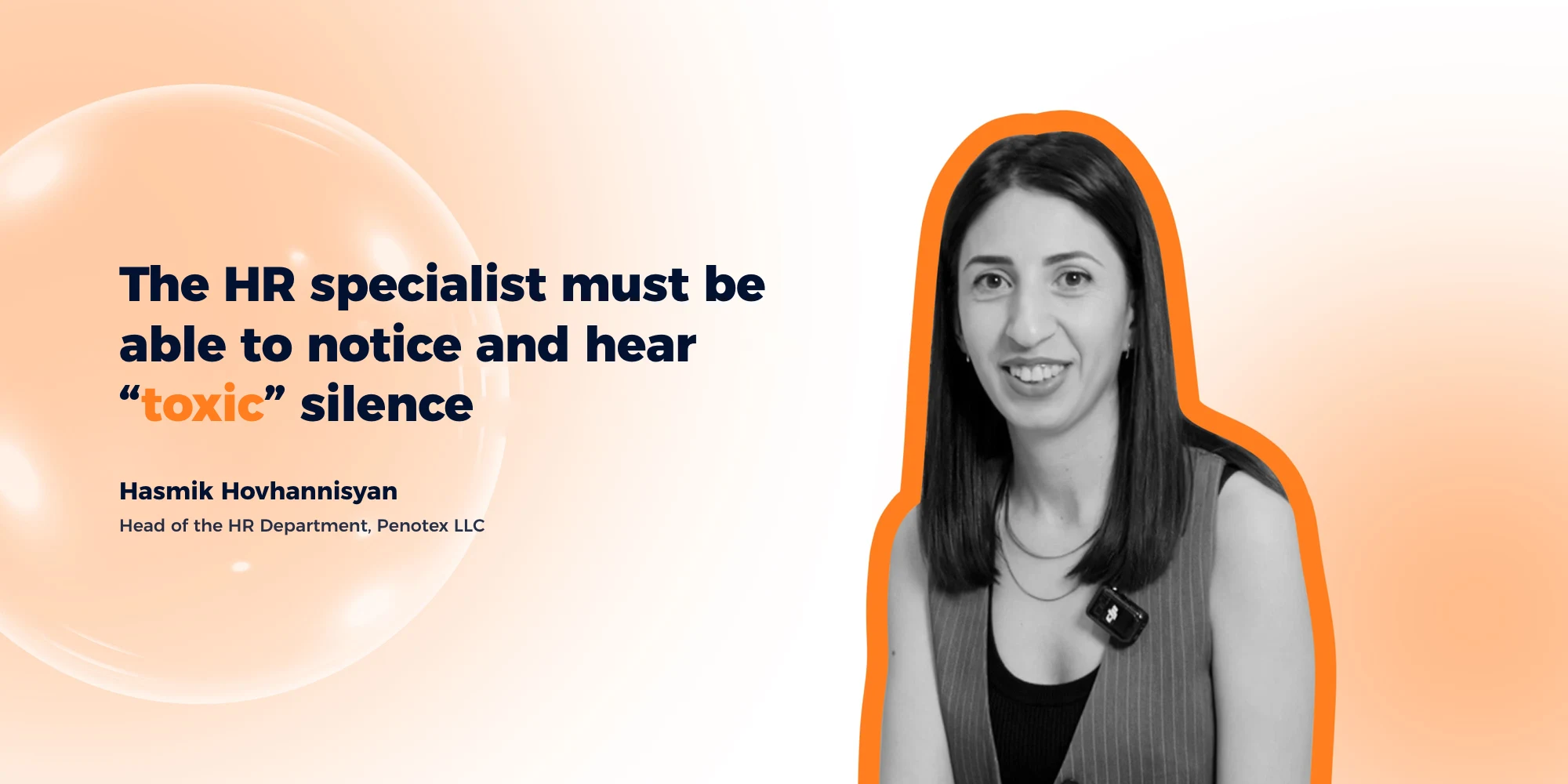
Silence in a team is not always a sign that there are no problems or that the team is in harmony. Silence can often speak volumes, sometimes even more than words and sentences. When employees stop asking questions and there are no debates, opinions or complaints, you need to be alert to toxic silence at work. Very often, this kind of employee silence hides fear, indifference, distrust, disappointment, emotional burnout and more.
- "There's no point in speaking up. It will be the same as always anyway, nothing is going to change..."
- "Nobody cares about my opinion anyway..."
- "Better to keep quiet than to start another conflict or get people talking..."
- "If I say it, they might misunderstand me..."
It is the silence that settles in at moments like these that is called "toxic silence." It undermines the team atmosphere, weakens effective communication, creates "invisible" tension, and that's not all... At first glance, such teams look "ideal": no complaints, no scandals, everything is "peaceful," everyone is united and decisions are unanimous... But behind that outward loyalty there is often fear, apathy, disappointment and the like...
In such cases, it is important for the HR specialist to be able to notice and "hear" that silence, and to tell the silence that signals agreement apart from "toxic silence."
What Causes Toxic Silence at Work?
Fear of Conflict
People are often afraid to express their opinion because it might be misunderstood or have negative consequences.
Distrust
Opinions they voiced in the past were ignored or even used against them.
Fear of Criticism
Some people simply avoid speaking up, thinking that their opinion might become a subject of discussion or criticism.
Lack of Engagement
When employees don't feel important, they see no point in taking part in any discussion.
How Can an HR Specialist "Hear" Silence in the Workplace?
- Pay close attention to nonverbal cues
- Run anonymous surveys regularly
- Hold one-on-one meetings often
- Encourage a culture of feedback
Advice
Don't be quick to assume that constant silence in a team is a sign of harmony or agreement. Silence has a "voice" too, and you need to be able to hear it. It can often point to deeper problems that deserve attention and need to be examined and brought to light, so that preventive steps can begin.
Remember: creating a healthy atmosphere is not a one-time step. It is the result of long and continuous work...
Toxic silence at work affects the team atmosphere, trust and effectiveness.
Read also about psychological safety in the workplace. You may also find our article on the role of one-on-one meetings in team development useful.
This article was published by HR Drone to support open communication, healthy team relationships and stronger psychological safety.