Work Ethic in Recruitment: Red Flags and Good Signs

Arpine Manukyan
HR Specialist, Arpisolar LLC
4 min read
Work ethic is one of the most important pillars of a positive, healthy environment in a company, as well as of its progress and effectiveness. It reflects how an employee carries out their duties, interacts with colleagues and managers and, ultimately, follows the company's internal procedures.
Work ethic in recruitment starts to show with the resume a candidate submits when applying for a job, and it is reflected at every stage of the employment relationship, right up to its end. It can never be stopped or interrupted, because it is part of a person's value system. Work ethic forms alongside a person's socialization and becomes part of who they are.
That is why, from the recruitment process onward, HR professionals pay close attention to how a candidate's work ethic shows, assessing it on a par with the other job requirements.
So what signals that a candidate does not meet the standards of work ethic? What are the red flags that catch HR professionals' attention during recruitment?
Recruitment Red Flags
Here are some of the most obvious candidate red flags:
Lack of responsibility and punctuality
For example: being late for arrangements made in advance, such as interviews, not showing up for an interview, or canceling the meeting at the last minute without giving a reason.
Lack of honesty and transparency
For example: inaccurate information in the resume, contradictory answers during the interview, or misleading information about previous experience and skills.
Honesty is one of the foundations of work ethic. If a candidate cannot be honest at the interview stage, they are unlikely to become a trustworthy employee.
Disrespectful behavior
For example: a rude, arrogant or dismissive tone from the candidate during the interview. Interrupting the interviewer, ignoring the questions asked and a lack of basic politeness all point to a lack of work ethic.
Lack of communication ethics
For example: negative comments about former employers or colleagues, or jokes that are inappropriate or carry a discriminatory undertone during interviews.
Arriving at the interview unprepared
For example: when the candidate does not know the name of the company or the position, shows complete indifference during the interview, does not clarify the immediate duties and scope of responsibility they would take on, and so on.
A careless appearance
Yes, this is also part of work ethic: when a candidate comes to a job interview arranged in advance looking sloppy and careless or, for example, talks while chewing gum.
Positive Signs of Work Ethic in Recruitment
The absence of the red flags above is grounds for concluding that the candidate is responsible and consistent, and ready to work in a corporate environment.
A candidate's honesty, responsibility and punctuality during recruitment, their discretion and respect toward the corporate environment and its information, and good communication ethics all increase the likelihood of them being considered for the position.
Ethical Recruitment Is a Two-Way Responsibility
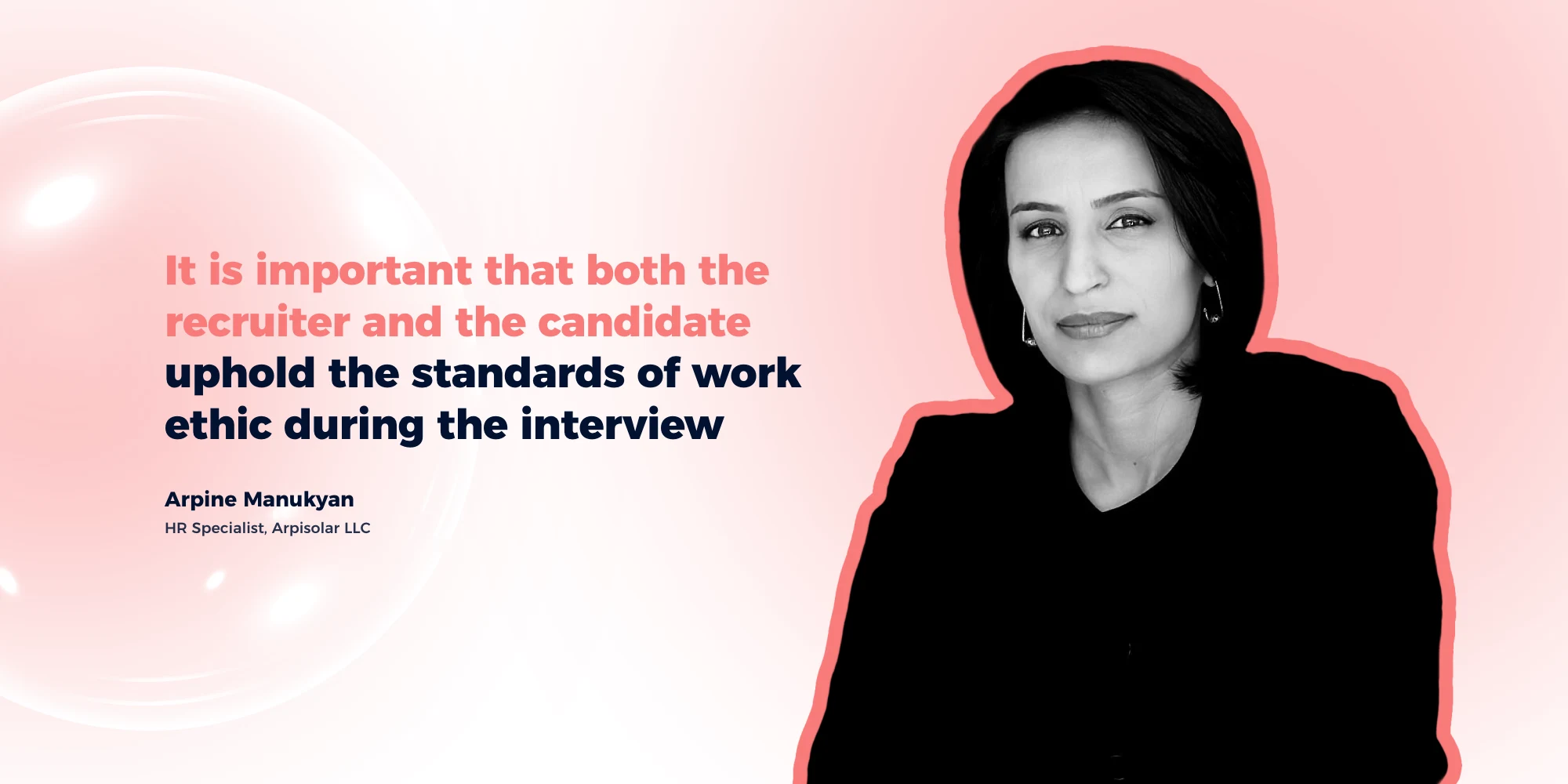
It is also worth stressing that work ethic is assessed not only by the recruiter or employer but also by the candidate. So the recruiting team must uphold the standards of work ethic too. Only then is it possible to lay the foundation for productive cooperation.
Work ethic in the recruitment process shapes an organization's reputation and credibility in the job market.
Read also: about ethical principles in HR. If you are building a team, take a look at the HR Drone for companies page, and write your job posting with the AI Job Writer tool.
This article was published by HR Drone to help develop a culture of ethical recruitment, ensure equal opportunities and build fair employer–employee relationships.